Feldherrnhalle
Back to all places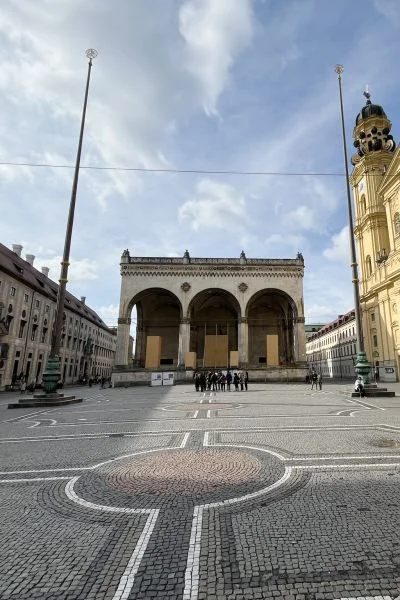
Feldherrnhalle
0:00 / 1:46Feldherrnhalle
The Feldherrnhalle is impressive monument isn’t just a collection of statues; it’s a symbol of Bavarian military history, a stage for significant events, and a landmark that has seen its fair share of controversy.
So, the Feldherrnhalle, which translates to "Field Marshals’ Hall," was built in the mid-19th century, specifically between 1841 and 1844. It was commissioned by King Ludwig I (we keep running into him, don’t we?) to honor the great commanders and achievements of the Bavarian army.
The design was inspired by the Loggia dei Lanzi in Florence, Italy. Ludwig I was a big fan of Italian Renaissance art and architecture, and he wanted to bring a touch of that Italian elegance to Munich.
The Feldherrnhalle features statues of important Bavarian military leaders, including Count Tilly and Prince Wrede. These statues are meant to inspire patriotism and pride in Bavarian military history.
What makes the Feldherrnhalle so special, and a little bit controversial?
The Statues: Count Tilly and Prince Wrede are important to Bavarian history, they represent military power.
Site of the Beer Hall Putsch: the Feldherrnhalle was the site of a very important event. Namely it was the ending point of Hitler’s attempt to coup in 1923. Several people died there and the Nazi’s were initially defeated.
Nazi Memorial: After the coup attempt, Nazis made this a place for their own worship and it was seen as the location where Hitler got his own political legitimacy after being defeated there.
"Dodgers’ Alley" Proximity: Directly next to the building is an area that the Nazi party made an obligatory worship place. People avoided walking there and would go to the side streets. Those side streets are called the Dodgers’ Alley.
48.14186, 11.57749