Glyptothek
Back to all places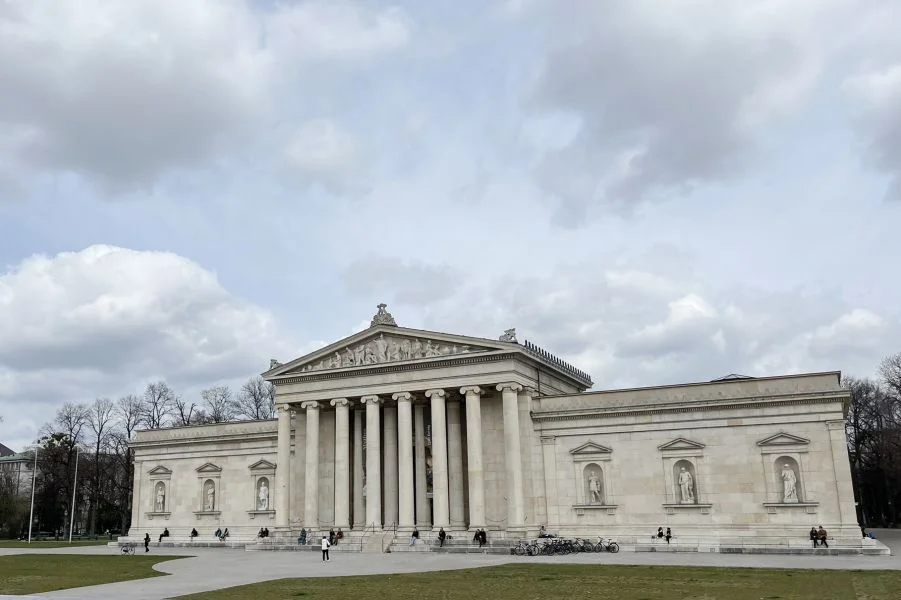
Glyptothek
0:00 / 1:15Glyptothek
the Glyptothek is a deliberate recreation of a classical temple, built to house a king’s passion for ancient sculpture. The museum was commissioned by King Ludwig I and it officially opened to the public in 1830.
The construction of the Glyptothek in the 1820s and its opening in 1830 were significant cultural events for Munich and Bavaria. It marked the beginning of Munich’s transformation into a major European art center, and it showcased the king’s commitment to Neoclassical ideals.
The building itself, designed by Leo von Klenze, is a masterpiece of Neoclassical architecture, deliberately modeled after ancient Greek and Roman temples. Walking through its halls is like stepping back in time. The simple, dignified architecture is designed to put the focus entirely on the sculptures themselves.
It houses an unrivaled collection of Greek and Roman sculptures. You’ll see masterpieces from archaic Kouroi figures to classical sculptures from the Parthenon and Aegina temples, to Roman portrait busts and mythological figures. It’s a chronological journey through classical sculpture, showcasing the evolution of style and technique over centuries. Highlights include the Barberini Faun, the Aegina Marbles, and the Munich Kouros.
48.14629, 11.56565