Isar Gate
Back to all places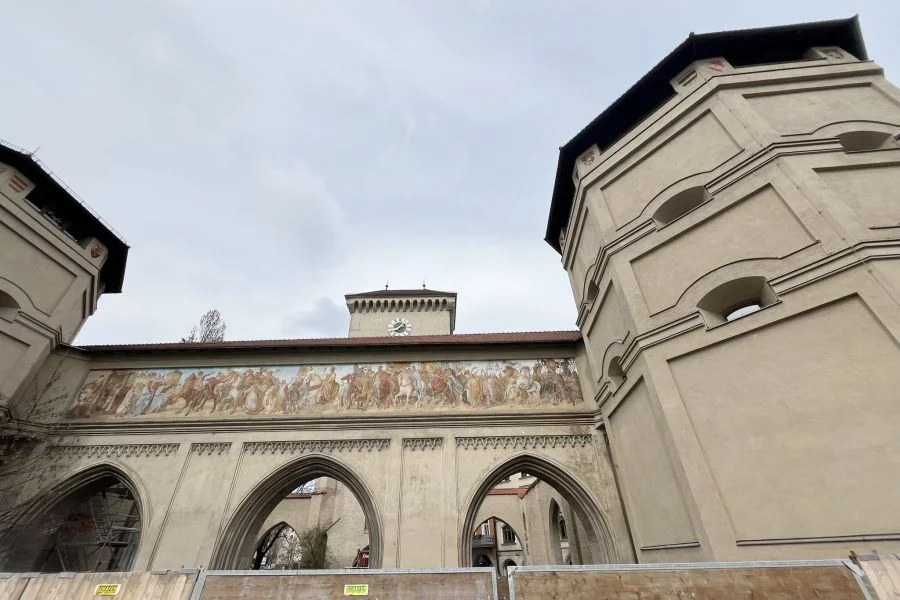
Isar Gate
0:00 / 1:40Isar Gate
We have reached Isar Gate, or Isartor as it’s known here! This is one of the last remaining medieval city gates in Munich, a tangible reminder of the city’s fortified past. Built in 1337, it is named after the nearby Isar River.
So, the Isartor wasn’t just any gate; it was part of Munich’s original city walls, built way back in the 14th century! Imagine what Munich was like back then, a walled city with bustling marketplaces and narrow cobblestone streets. The Isartor was one of the main entrances, controlling who came in and out of the city.
Over the centuries, Munich expanded, and the city walls became less important. Many of the gates were torn down, but thankfully, the Isartor survived. It’s a testament to the city’s history and a reminder of its medieval origins.
The Isartor actually consists of three towers. They are connected by a central structure. It’s a unique design, and it’s one of the things that makes the Isartor so distinctive.
If you look closely at the Isartor, you’ll notice some interesting details. The towers are adorned with frescoes, depicting scenes from Bavarian history. These frescoes were added in the 19th century, and they add to the gate’s historical charm.
The central tower houses a small museum dedicated to Karl Valentin, a famous Bavarian comedian and actor. It’s a quirky and fun museum, and it’s worth a visit.
The area around the Isartor is also quite lively. It’s a busy intersection with shops, restaurants, and public transportation. It’s a great place to people-watch and soak in the atmosphere of modern Munich.
48.13511, 11.58184