Maximilianstrasse
Back to all places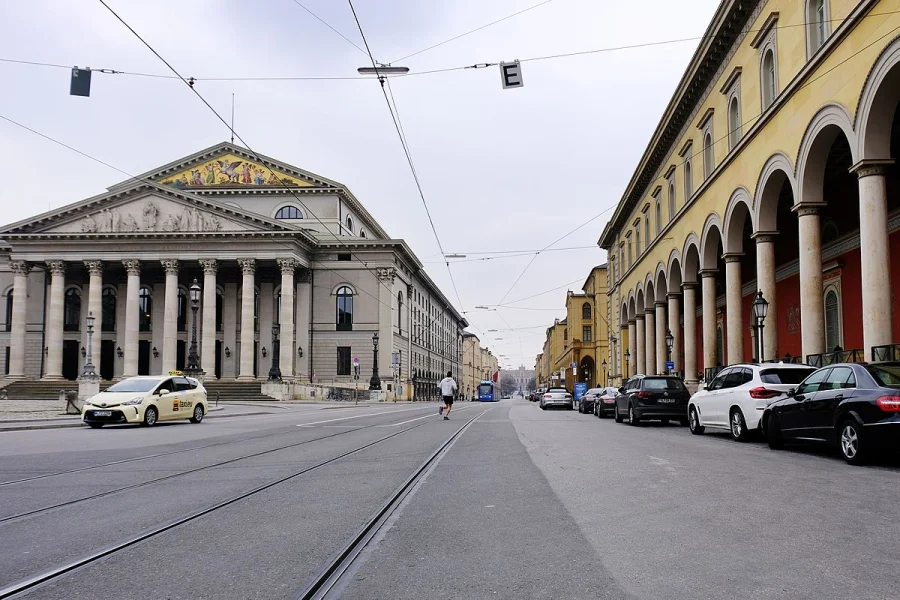
Maximilianstrasse
0:00 / 1:31Maximilianstrasse
Maximilianstrasse, one of Munich’s most renowned boulevards, was commissioned in 1850 under the rule of King Maximilian II of Bavaria as part of his ambitious vision to unify Munich’s cityscape with grand, neo-Gothic architecture. Officially opened in 1858, the avenue soon became an emblematic intersection between artistic culture and political might. Lined with majestic palaces, such as the spectacular Schauspielhaus, today’s Residenz Theatre, and the stately Museum Fünf Kontinente, the street embodies Munich’s historic transformation during the 19th century into a flourishing royal capital. During World War II, several of Maximilianstrasse’s architectural treasures suffered extensive damage, but postwar reconstruction restored these neo-Gothic facades, preserving the boulevard’s unique character. In the 20th century, the street evolved into an international fashion destination, hosting luxury brands and celebrated jewelers, drawing a global elite and echoing its longstanding role as a crossroads for cultural exchange. Significant demonstrations and parades—such as the annual carnival processions of the early 1900s—once paraded down this grand thoroughfare, cementing its legacy at the heart of Bavarian public life. Today, Maximilianstrasse stands as both a living historical artifact and a symbol of Munich’s adaptability across centuries, offering visitors a tangible connection to its royal past and cosmopolitan present.
48.13909, 11.58049