Wittelsbacherplatz
Back to all places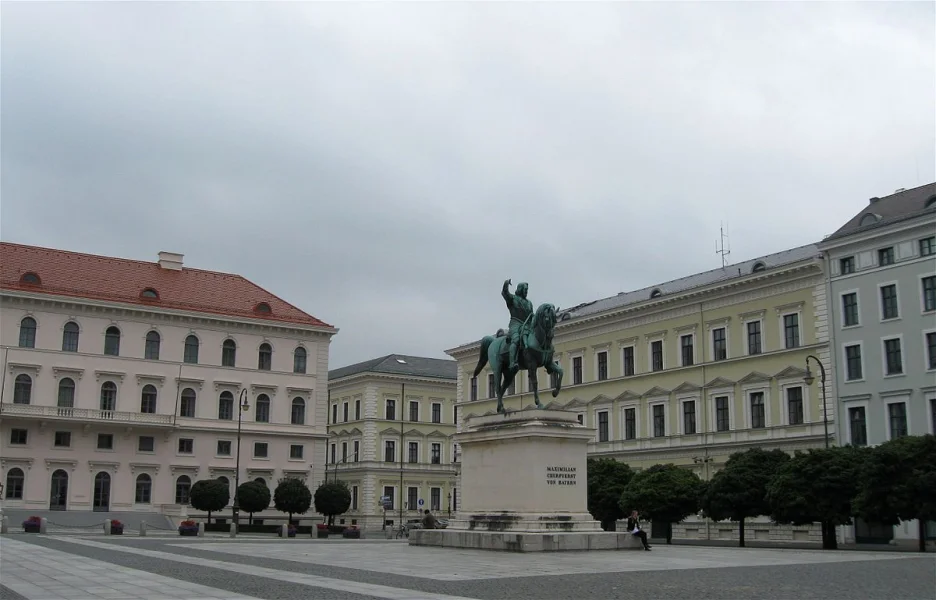
Wittelsbacherplatz
0:00 / 1:43Wittelsbacherplatz
Wittelsbacherplatz, located in the heart of Munich’s Maxvorstadt district, stands as a distinguished example of neoclassical urban planning and architecture. Designed by the renowned architect Leo von Klenze in the early 19th century, this square was envisioned as part of the elegant extension of Munich under King Ludwig I of Bavaria. Completed in 1833, Wittelsbacherplatz quickly became a center of social and cultural life in the Bavarian capital. The square is framed by impressive buildings, most notably the Palais Arco, which was constructed between 1820 and 1824, and the Staatliches Museum Ägyptischer Kunst, housing one of the most significant collections of Egyptian art in Germany. At the center of Wittelsbacherplatz stands the majestic equestrian statue of Elector Maximilian I, created by sculptor Bertel Thorvaldsen and unveiled in 1839. The monument celebrates the importance of the Wittelsbach dynasty, whose members ruled Bavaria for over 700 years, shaping the region’s political and cultural landscape. Notably, the square has played host to numerous historical events, including royal processions and public gatherings during Munich’s transformation into a modern European metropolis. During World War II, much of the surrounding area sustained damage from air raids, but Wittelsbacherplatz itself retained its historical character. In the postwar period, the square became a symbol of Munich’s architectural resilience and historical consciousness. Today, Wittelsbacherplatz continues to serve as a venue for open-air events and cultural exhibitions, while its stately ambiance and storied past attract both residents and visitors eager to explore Munich’s rich heritage.
48.14330, 11.57609